
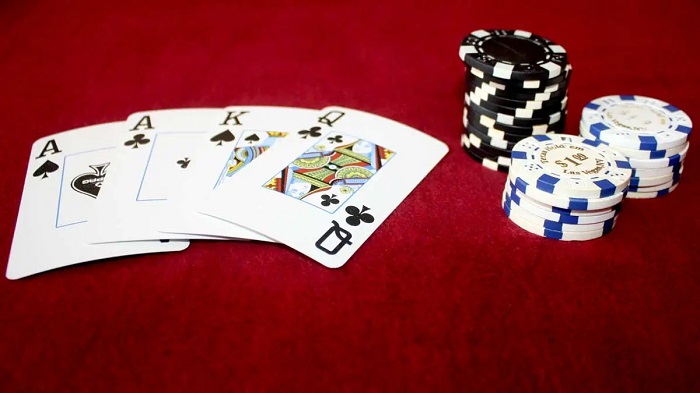
For decades, Texas Hold’em has stood as the undisputed face of poker. Propelled by television broadcasts, online gaming platforms, and iconic tournament moments, Hold’em became so dominant that casual observers often treat it as synonymous with poker itself. Yet viewing the game solely through the lens of two hole cards and a five-card community board is like looking at athletics and seeing only the sprint.
Poker is an expansive family of games, each built on distinct mathematical foundations, information structures, and psychological pressures. When you move beyond the familiar confines of standard Hold’em, the table dynamic transforms. What makes someone a lethal strategist in one format can make them an easy target in another. Understanding the world’s most popular poker variants—and the unique playing styles each demands—reveals the true depth and versatility of card room strategy.
Texas Hold’em: The Benchmark of Positional Warfare and Deception
Texas Hold’em remains the primary gateway into poker because of its deceptive simplicity. Each player receives two private hole cards, followed by five community cards dealt across three rounds: the flop, the turn, and the river.
Despite its straightforward rules, the strategic ceiling of No-Limit Hold’em is practically bottomless. The game is defined primarily by positional leverage. Because players act in a fixed order based on the position of the dealer button, acting last gives a competitor an enormous informational advantage. You see how everyone else reacts before committing a single chip.
The dominant playing style in modern Hold’em is aggressive and range-oriented. Rather than playing individual hands, experienced competitors think in terms of entire hand distributions. They utilize controlled aggression, leveraging position to force opponents into uncomfortable decisions with bets sized to maximize expected value or polarize an opponent’s holding. Because hole cards are kept concealed until showdown, Hold’em creates fertile ground for psychological maneuvers, sophisticated bluffs, and calculated fold equity. It is a game where the cards you hold often matter far less than your table position, your chip stack, and your ability to craft a believable story with your betting lines.
Pot-Limit Omaha: Combinatorial Chaos and the Search for the Nuts
If Texas Hold’em is a chess match, Pot-Limit Omaha (PLO) is a high-speed highway chase. In standard Omaha, players receive four hole cards rather than two, but they must use exactly two from their hand combined with exactly three from the community board to construct their final five-card holding.
This mechanical twist fundamentally alters the underlying math. Four hole cards yield six distinct two-card combinations, compared to the single combination available in Hold’em. Because of this exponential increase in possibilities, pre-flop equities run extraordinarily close. In Hold’em, a pair of pocket Aces is a massive eighty-percent favorite against an underpair before the flop. In PLO, even the strongest starting holdings rarely possess more than a sixty-to-forty advantage over well-coordinated rundowns.
The strategic style in PLO shifts almost entirely to post-flop navigation. Casual players often fall into the trap of overvaluing mediocre made hands, such as small full houses or non-nut flushes. In PLO, playing style must be ruthlessly anchored to holding the absolute nuts with redraws—meaning you currently have the best possible hand while simultaneously holding draws to an even stronger holding should the board change. Because bets are capped at the current size of the pot, brute-force pre-flop intimidation disappears, replaced by deep implied odds and calculated multi-way battles where hand values fluctuate violently on every street.
Seven-Card Stud: Pure Memory and Information Tracking
Before the modern Hold’em explosion, Seven-Card Stud was the staple game of home parlors and high-stakes casino backrooms across North America. Stud is a member of the classic open-face family: it features no community cards. Instead, each player receives a combination of private downcards and exposed upcards across multiple betting rounds until each participant holds seven total cards.
Stud requires an entirely different cognitive toolkit. Without a shared board of five cards tying everyone’s possibilities together, players must rely on active memory and visual observation.
A successful Stud player must track the “dead cards”—the upcards of folded opponents. If you are drawing toward a spade flush, but four folded players each showed two exposed spades on earlier streets, your statistical odds of completing the hand drop precipitously. Furthermore, Stud is almost exclusively played with a fixed-limit betting structure and an ante-driven economy rather than blinds. This format discourages reckless, massive bluffs and instead rewards steady patience, street-by-street discipline, and the ability to deduce an opponent’s hidden holdings by cross-referencing their betting habits against their exposed cards.
Omaha Hi-Lo: The Strategic Calculus of the Scoop
Omaha Hi-Lo, frequently referred to as Omaha 8 or Better (O8), introduces split-pot mechanics to the four-card Omaha structure. At showdown, the pot is divided equally between the traditional best high hand and the best qualifying low hand. To qualify for low, a hand must consist of five unpaired cards ranked eight or lower.
Many inexperienced players approach Hi-Lo by building a hand designed strictly to win the low half of the pot. This is often a disastrous tactical error that results in being “quartered”—splitting the low half with an opponent holding identical ranks, which nets a financial loss after paying into a bloated pot.
The premier playing style in Omaha Hi-Lo revolves around the concept of the scoop. Seasoned competitors look for starting cards that possess two-way potential, such as suited Aces accompanied by wheel cards like deuces and treys alongside high Broadway components. The goal is to capture the entire pot by holding both the nut low and the nut high, or by winning the high outright on boards where no low qualifies. Playing style in O8 is measured and defensively oriented, prioritizing structural hand integrity over speculative gambling.
Short Deck Hold’em: Compressed Math and Amplified Action
Originating in Asian high-stakes rooms before expanding to Western tournament circuits, Short Deck (or Six-Plus) Hold’em strips all deuces, treys, fours, and fives from the deck, leaving a 36-card pack.
Removing sixteen low cards drastically alters probability and hand values. With fewer cards in circulation, straights occur with immense frequency, while flushes become mathematically rarer than full houses. Consequently, the standard hand rankings are modified: a flush ranks higher than a full house, and three of a kind often beats a straight depending on local house rules. Furthermore, an Ace can act as both the highest card and a five to complete the low end of a nine-high straight.
The playing style in Short Deck is unabashedly aggressive. Traditional pre-flop guidelines vanish; hands connect with the board far more often, and edges are razor-thin. Standard mathematical shortcuts like the rule of four and two must be replaced with the rule of six and three to calculate river probabilities accurately. Players who excel in Short Deck thrive on high variance, embrace calculated flips, and possess the flexibility to reassess relative hand strength in an environment where a simple two pair is practically worthless.
Developing Tactical Fluidity Across the Modern Felt
Restricting your play to a single variant provides comfort, but true table mastery is found in versatility. The emergence of mixed-game formats—such as H.O.R.S.E., which cycles through Hold’em, Omaha Hi-Lo, Razz, Stud, and Stud Eight-or-Better—highlights the enduring value of a complete card player.
Stud sharpens your memory and board awareness. Omaha deepens your understanding of multi-card equities and positional draws. Split-pot games instill emotional patience and discipline, while Short Deck tests your mathematical flexibility under high pressure. When you return to Texas Hold’em after exploring these alternative formats, you bring a more nuanced perspective on betting lines, card removal, and opponent psychology. Exploring diverse variants is not just a detour from the mainstream; it is the most effective way to refine your instincts and appreciate the rich complexity of poker.
