
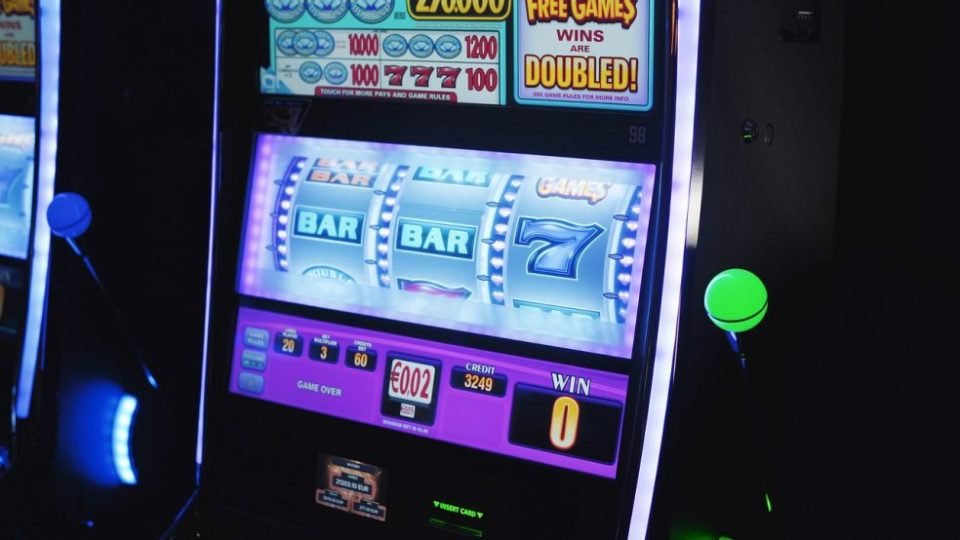
When you tap the spin button on a digital slot machine, the screen erupts into a flurry of motion. Golden bells blur past, vibrant fruit symbols tumble down virtual columns, and sound effects build suspense as the final reel slowly clicks into place. The visual theater feels mechanical, echoing the physical momentum of traditional gear-and-lever slot cabinets that once dominated casino floors.
In reality, the fate of that wager was decided long before the first reel finished animating. The moment your finger pressed the screen, a line of code completed an unseen calculation in a fraction of a millisecond. Everything that followed—the near-misses, the bouncing symbols, the climbing musical crescendos—was simply graphic presentation designed to entertain. At the core of every modern virtual casino game lies a silent, continuous mathematical engine: the Random Number Generator (RNG). Understanding how these systems function reveals the intricate bridge between abstract mathematics, regulatory architecture, and digital entertainment.
The Illusion of Motion Versus the Reality of the Millisecond
The fundamental divergence between physical and online gaming is the separation of outcome from physical action. In a land-based roulette wheel, the ball’s final resting place is governed by classical mechanics: initial velocity, friction, air resistance, and the subtle imperfections of the wheel’s wood and brass frets.
Online casino games operate in a purely computational environment where physical laws do not apply. Developers must manufacture unpredictability entirely through software. To achieve this, modern iGaming separates each title into two distinct components: the front-end presentation layer and the back-end math engine.
The presentation layer handles everything you see and hear. It renders high-definition graphics, triggers celebratory animations, and provides the familiar tactile pacing that players expect. The back-end engine, hosted on remote, highly secure servers, handles the actual logic. When a player initiates a round, the game client sends a secure query to the server, prompting the RNG to draw an outcome. The server determines whether the spin is a win or a loss, calculates the exact payout amount, and feeds that raw data back to the client. The software then selects the visual animation that corresponds to that predetermined mathematical reality.
The Mechanics of Algorithmic Chance
Randomness in computer science is notoriously difficult to achieve. True randomness generally requires measuring unpredictable physical phenomena from the natural world, such as atmospheric radio static, radioactive decay, or thermal fluctuations in hardware circuits. While these hardware-based True Random Number Generators (TRNGs) exist, they are computationally resource-intensive and impractical for platforms executing tens of thousands of simultaneous bets per second.
Instead, online casinos rely primarily on Cryptographically Secure Pseudorandom Number Generators (CSPRNGs).
A pseudorandom generator uses complex mathematical formulas to produce long sequences of numbers that exhibit no discernible pattern. The process begins with a starting value known as a seed. To ensure unpredictability, developers construct this seed by combining volatile system inputs, such as microsecond timestamps from high-precision system clocks, server CPU load metrics, and mouse movements or keystroke intervals.
The algorithm takes this constantly shifting seed, runs it through layers of intense non-linear mathematical operations, and outputs an unending stream of massive integers. The algorithm cycles continuously, producing millions of numbers every second even when no one is actively playing the game. When you click the spin button, you are essentially plucking whatever value happens to be generated at that exact nanosecond. If you had clicked a tenth of a second earlier or later, the mathematical outcome would have been entirely different.
Translating Raw Numbers into Reels, Cards, and Paylines
An RNG does not output a message saying “three cherries” or “dealer busts.” It generates massive numerical values, often spanning billions of digits. The game software uses an intermediate mathematical framework to translate these numbers into visible gameplay elements.
Consider a five-reel digital slot game. The developer builds a virtual reel strip for each column, containing a fixed sequence of stops that represent various symbols. The software takes the raw number from the RNG, applies a mathematical modulo operation to scale it down to the exact range of stops on the reel, and assigns that number to a specific symbol position.
Virtual Reel Weighting and Volatility
This translation layer is where developers configure a game’s mathematical personality, known as volatility and Return to Player (RTP). Unlike mechanical three-reel slots of the twentieth century, which were physically constrained by the circumference of a metal drum, a digital reel strip can contain hundreds or thousands of virtual stops.
-
Low-tier symbols, such as standard card suits or basic fruit icons, are assigned hundreds of individual virtual stops across the spectrum, ensuring they appear regularly to sustain player engagement.
-
High-value jackpot symbols and bonus triggers may be mapped to only a tiny handful of stops out of millions of possibilities.
-
Blank spaces or near-miss configurations are mathematically positioned so that the visual result accurately reflects the underlying statistical distribution without ever compromising the randomness of the selection.
Because the underlying RNG remains completely uniform in its output, the game’s long-term payout percentage is maintained through this deliberate weighting of the virtual strips. Over millions of simulated rounds, the math inevitably balances out to the developer’s certified baseline.
Dismantling Common Gambler Fallacies
The invisible nature of digital algorithms often breeds superstition among casual players. Because humans are naturally wired to identify patterns, players frequently impose narrative meaning onto completely independent events.
The most prevalent misconception is the idea of hot and cold streaks, often referred to as the gambler’s fallacy. Players frequently assume that a slot machine that has gone hundreds of spins without paying a bonus is “due” for a payout, or conversely, that a game that just paid a massive jackpot should be avoided because it needs to recover funds.
An authentic RNG has no memory. It does not possess a registry tracking past wins, nor does it monitor player balances or casino cash reserves. Every spin is an isolated statistical event, operating with the exact same mathematical probabilities as the spin before it and the spin that will follow. A virtual reel with a one-in-one-thousand chance of hitting a specific combination has that exact same one-in-one-thousand chance on every single pull, regardless of whether that combination appeared on the previous turn.
Similarly, player-controlled features such as stopping the reels manually or holding down the spin button do not influence the RNG. Because the winning state is cataloged by the server the moment the round begins, pressing a stop button merely truncates the animation timer. It alters the pacing of the visual experience, but the underlying numbers remain unchanged.
The Architecture of Trust and Independent Auditing
In a system where outcomes are invisible lines of server code, player trust cannot be taken for granted. To operate legally in regulated jurisdictions, online gaming developers must subject their software to rigorous, independent oversight.
Specialized third-party testing laboratories evaluate RNG algorithms before any game is deployed to the public. These auditors subject the code to battery tests spanning billions of simulated spins, examining the output for statistical anomalies, cyclical repetitions, or hidden biases.
-
Uniformity testing verifies that every possible number has an equal probability of being selected over time.
-
Independence testing ensures that past outcomes have zero predictive correlation with future draws.
-
Source code reviews confirm that the software contains no backdoor entry points or algorithmic triggers that could alter performance based on bet size, time of day, or player profile.
Once a title passes certification, the software binary is digitally signed and locked. Regulators conduct routine audits to ensure that the production code operating on casino servers matches the exact hash value of the verified build. Furthermore, because these calculations run on the developer’s remote infrastructure rather than the operator’s local website, the online casino hosting the game cannot manipulate the math to tilt the odds in their favor.
The modern digital casino experience relies on a delicate balance: providing players with an engaging, cinematic spectacle while preserving absolute mathematical integrity behind the curtain. The spinning reels and flashing lights may be digital illusions, but the algorithms powering them represent some of the most strictly regulated, mathematically sound technology in the consumer entertainment world.
