
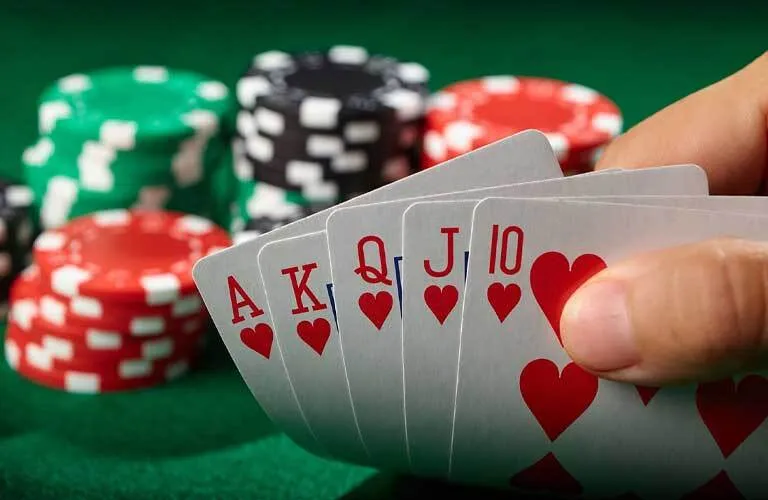
Poker has long been regarded as more than just a card game. It blends psychology, probability, strategy, and risk-taking into a dynamic challenge that attracts both casual players and professionals. Whether you are sitting at a live table or joining an online room, poker demands a balance of patience, observation, and skill. In this guide, we will dive deep into the fundamentals, strategies, and real-life applications that make poker such a fascinating pursuit.
Understanding the Basics of Poker
Poker is a family of card games where players wager on the strength of their hands, with betting rounds driving the pace. While there are many variations, most revolve around the same principles: hand rankings, betting rules, and positional awareness.
The Poker Hand Rankings
Every player must understand the hierarchy of hands, as these determine outcomes in showdowns:
-
Royal Flush: A, K, Q, J, 10 of the same suit
-
Straight Flush: Five consecutive cards of the same suit
-
Four of a Kind: Four cards of the same rank
-
Full House: Three of a kind plus a pair
-
Flush: Five cards of the same suit, not in sequence
-
Straight: Five consecutive cards of mixed suits
-
Three of a Kind: Three cards of the same rank
-
Two Pair: Two sets of pairs
-
One Pair: A single pair
-
High Card: The highest card when no other hand forms
Betting Rounds
Poker’s betting system makes it unique compared to other card games. Common rounds include:
-
Pre-Flop: Bets made after players receive their hole cards
-
Flop: Bets after the first three community cards are revealed
-
Turn: Bets following the fourth community card
-
River: Bets made after the final card is revealed
Understanding when to check, bet, raise, or fold in each round is crucial to managing your chips effectively.
The Role of Strategy in Poker
Poker is not a game of chance alone; it rewards strategic thinking and adaptability. While luck influences outcomes in the short term, skill dominates over time.
Positional Advantage
Your position at the table significantly influences your decisions:
-
Early Position (EP): Acting first, you must be cautious, playing only strong hands.
-
Middle Position (MP): More flexibility, but still requires discipline.
-
Late Position (LP): The most powerful seat, allowing you to act after others and exploit their choices.
Bluffing and Semi-Bluffing
Bluffing is an art form in poker. A successful bluff convinces opponents to fold superior hands. Semi-bluffing, where you bluff with a drawing hand (e.g., four cards to a flush), gives you two ways to win: either by forcing folds or by hitting your draw.
Bankroll Management
Even the best poker players face downswings. Smart bankroll management ensures you can survive losses without going broke. Many players follow the guideline of never risking more than 5% of their bankroll in a single session.
Poker Psychology: Reading Your Opponents
Poker is often described as a game played with people, not cards. The ability to read your opponents’ behaviour is as valuable as knowing the odds.
-
Physical Tells: In live poker, subtle gestures like nervous tapping or sudden silence can reveal hand strength.
-
Betting Patterns: Online or offline, how much and how often a player bets tells a story about their confidence.
-
Table Image: Players form opinions about you too. Mixing up your style keeps opponents guessing.
Mathematics and Probability in Poker
Poker is heavily grounded in numbers. Every decision, from calling a bet to pushing all-in, can be informed by probability.
Pot Odds
Pot odds compare the potential reward against the cost of calling. For example, if the pot is £100 and you must call £20, you are getting 5-to-1 odds. If your chance of hitting your hand is greater than the odds required, it is a profitable call.
Expected Value (EV)
Expected value measures the long-term profit or loss of a decision. Making +EV choices consistently is how skilled players beat the game over time.
Popular Variants of Poker
Poker has evolved into multiple forms, each offering its own dynamics:
-
Texas Hold’em: The most popular variant, with two hole cards and five community cards.
-
Omaha: Similar to Hold’em, but with four hole cards, creating stronger hand possibilities.
-
Seven Card Stud: Players receive a mix of face-up and face-down cards with no community board.
-
Razz: A lowball game where the lowest hand wins.
Essential Skills for Success in Poker
To progress in poker, players need a diverse skill set:
-
Patience: Waiting for strong hands or profitable opportunities.
-
Discipline: Folding when necessary, even after investing chips.
-
Adaptability: Adjusting strategy based on the table’s flow.
-
Emotional Control: Avoiding tilt, where frustration leads to reckless play.
Real-Life Applications of Poker Skills
Interestingly, skills learned at the poker table can benefit other aspects of life:
-
Decision-Making Under Pressure: Poker trains you to evaluate options quickly with incomplete information.
-
Risk Management: Choosing when to take risks mirrors financial decisions.
-
People Reading: Observational skills developed in poker improve interpersonal awareness.
Common Mistakes New Players Make
Beginners often fall into predictable traps:
-
Playing too many hands out of impatience
-
Overvaluing weak pairs
-
Ignoring position
-
Chasing losses without discipline
Avoiding these pitfalls helps beginners progress faster.
Advanced Concepts in Poker
For those looking to elevate their game, advanced strategies include:
-
Range Analysis: Considering the entire range of hands your opponent might hold, rather than just one.
-
Balancing Play: Mixing bluffs with strong hands so you are not predictable.
-
Game Theory Optimal (GTO) Play: A mathematically balanced approach that minimises losses against any opponent.
FAQ Section
What is the most important skill in poker?
Discipline is often the most important. Knowing when to fold and wait for a better opportunity saves chips and ensures long-term survival.
How often should you bluff in poker?
There is no fixed percentage, but successful bluffing depends on the table dynamics, your image, and your ability to read opponents.
Is poker more about luck or skill?
Luck influences short-term results, but over time, skill dominates. Players who understand strategy, psychology, and probability consistently outperform others.
What is tilt in poker?
Tilt refers to an emotional state where frustration or anger causes poor decision-making. Managing tilt is vital for consistent play.
Can poker strategies apply to business or investing?
Yes. Decision-making under uncertainty, bankroll management, and risk evaluation are skills transferable to financial and professional situations.
Should beginners start with Texas Hold’em or another variant?
Texas Hold’em is ideal for beginners because of its widespread popularity and simpler rules compared to other formats.
